
Wedding Planning, Open Bars & the One Thing You Should Never Say

We spend plenty of time talking about brides on Martini Mondays—but there is another pretty important person involved in the wedding. You know, the groom!
For this episode, I invited two very special guests to join me: my brothers, George and Stephen Galanopoulos. Over espresso martinis, we talked about wedding planning from a groom’s perspective—what they actually care about, what completely surprised them and how they can support their partners throughout the process.
George shared his perspective as a married man looking back on his wedding to Morgan, while Stephen gave us the currently engaged point of view as he plans his upcoming wedding to Lexi. And, naturally, the conversation included plenty of sibling banter, wedding mishaps and brutally honest advice.
How Involved Do Grooms Want to Be?
There is a stereotype that the groom only needs to show up in a tuxedo, smile for the photos and say, “I do.” But as George and Stephen explained, many grooms genuinely want to participate—they simply may not know where they fit into the planning process.
Stephen expected to be very involved because Lexi wanted wedding planning to feel like a partnership. Her busy schedule as a flight attendant also means he regularly helps with calls, appointments and logistical details.
George knew Morgan already had a strong vision and plenty of event-planning experience. He was happy to help, especially with logistics, but quickly realized just how many wedding decisions he had absolutely no opinion about.
One flower versus another? Both looked beautiful.
A specific décor detail? He trusted Morgan’s vision.
That did not mean he didn’t care about the wedding. He simply didn’t always have the knowledge or context to confidently choose between two very specific options.
That distinction is important for both partners to understand: “I don’t know” is not necessarily the same as “I don’t care.”
What Do Grooms Actually Care About?
While every groom is different, George and Stephen agreed that their biggest priorities were fairly straightforward:
- An open bar with enough bartenders to keep the lines moving
- Great music that keeps every generation on the dance floor
- Good food
- A venue that creates the right atmosphere
- A fun and comfortable experience for their guests
- Tuxedos that fit properly—and preferably do not fall apart
The overall theme was less about selecting every visual detail and more about how the wedding would feel. Would guests have fun? Would they be able to get a drink without standing in a long line? Would the music appeal to more than one generation?
As I always say, guests tend to remember the food, drinks and music. Apparently, the grooms agree.
Give the Groom Something to Own
Music was one of George’s primary responsibilities for his wedding, and he enjoyed helping build the playlist. However, he learned that creating a three-hour playlist does not necessarily mean the DJ will play three hours of full songs. DJs frequently play only a minute or two before transitioning, so couples may need more music than they initially expect.
It is also helpful to discuss the must-play songs, do-not-play songs and the overall energy you want throughout the evening. And if the dance floor experiences a code-red emergency? According to George, play “Unwritten” by Natasha Bedingfield. It will bring everyone back together.
The larger lesson is to give each partner an area that genuinely interests them. It could be the music, bar selections, transportation, food, honeymoon or guest experience. Let them take some ownership without making them feel as though one imperfect decision will ruin the wedding.
The Tuxedo Disaster
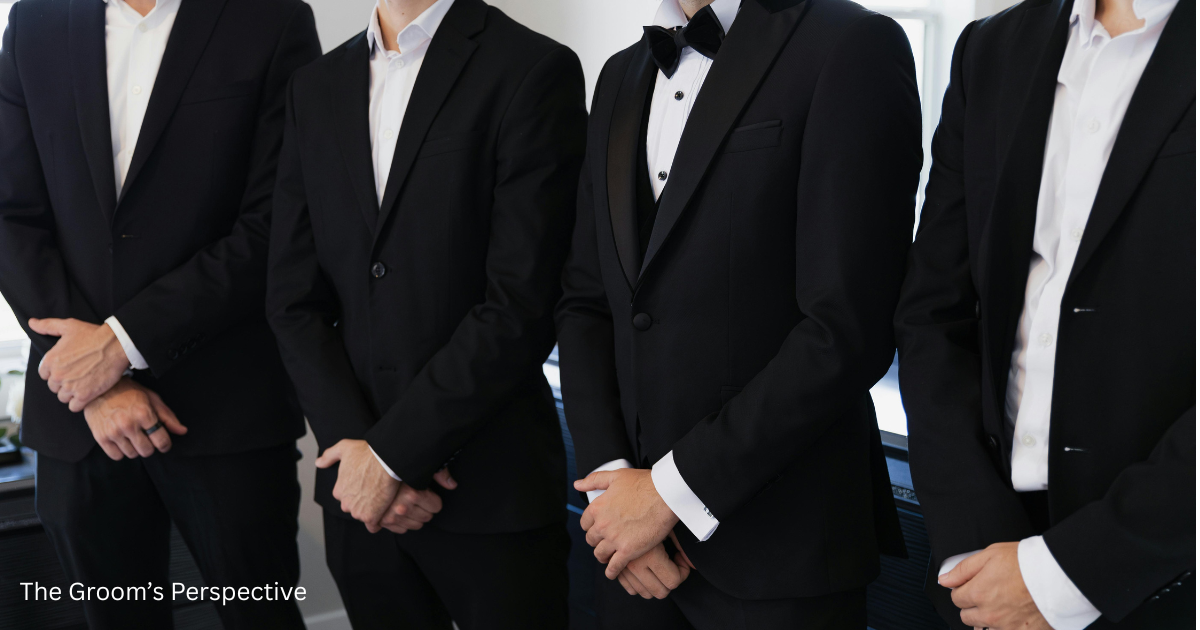
Of course, we also needed to discuss groom and groomsmen fashion.
George ordered his tuxedo online because he lived in a different part of the country from many of the people involved. Although the process sounded convenient, nearly everyone needed to return their tuxedo at least twice.
George sent his tuxedo back several times, and when the jacket still didn’t fit correctly on the fourth try, he finally purchased a custom tuxedo just days before the wedding.
The lesson? Do not leave tuxedo fittings until the last minute, especially when coordinating a wedding party in multiple locations. Try everything on early, move around in it and check every button, suspender and seam.
Stephen chose a more flexible approach for his groomsmen. Those who already own an appropriate black tuxedo may wear it, while anyone who needs one can rent or purchase one. The details will still feel cohesive without forcing every groomsman to spend money on the exact same tuxedo.
The Wedding Costs That Surprise Grooms
Wedding expenses can quickly become overwhelming—not only because of the major vendors, but because of all the smaller additions that appear during the final months.
George’s wedding brought together guests from 22 states, so transportation and the overall guest experience became especially important. Buses, logistical details and last-minute necessities continued adding to the total.
Stephen was especially surprised by the cost of invitations. The starting price may seem manageable, but thicker paper, layered pieces, upgraded printing and other beautiful little additions can suddenly turn stationery into a major expense.
The takeaway is to leave some breathing room in the budget. If every dollar is assigned from the beginning, the final stretch of planning may feel far more stressful than it needs to be.
What a Groom Should Never Say
The clearest advice from the entire conversation?
Do not say, “I don’t care.”
Even if you genuinely cannot tell the difference between two flowers, saying you do not care can make your partner feel as though you are uninterested in the wedding itself.
Instead, try:
“I’m not sure which one works best with your vision, but I want you to be happy.”
Or simply ask:
“How can I help?”
It is a small change in language, but it communicates partnership and support instead of indifference.
And while we are discussing things not to say, “You’re wrong” probably should not make an appearance either. “I don’t agree—can I explain why?” may be a much better option for both wedding planning and marriage in general.
The Best Advice for Newly Engaged Grooms
George and Stephen ended the conversation with advice every newly engaged groom should hear: enjoy the process and support your partner.
Wedding planning can create tension around money, family, expectations and countless tiny decisions. Some issues truly need to be addressed, but many are not worth allowing them to overshadow the reason you are getting married.
Support your partner. Ask where you can help. Stay calm when something small goes wrong. And when the wedding day finally arrives, let the little hiccups roll off your back.
You are marrying your best friend. That is the part that matters.
The planning may feel long, but the wedding itself goes incredibly fast. Before you know it, you will wake up the next morning wondering how it is already over.
So take it all in, enjoy the espresso martinis and remember: open bar, good music, properly fitted tuxedos—and never say you don’t care.
Cheers, and happy Martini Monday!
Have a question for George, Stephen or another groom? Send us a message and tell us what you want to know about wedding planning from the groom’s perspective.